
<i>Ocimum gratissimum</i> diet inclusion abrogates N-methyl-N-nitrosourea-induced colorectal toxicity in male Wistar rats via attenuating oxidative stress and colonic mucosa injuries
DOI:
https://doi.org/10.51412/psnnjp.2026.023Keywords:
N-methyl-N-nitrosourea, Carcinoembryonic antigen, Colorectal, Antioxidant, Ocimum gratissimum Leaf, ChemopreventionAbstract
Background: Colorectal toxicity disrupts intestinal homeostasis, undermining treatment efficacy and diminishing patient quality of life. The preventive effects of dietary inclusion of graded levels of Ocimum gratissimum leaf on N-methyl-N-nitrosourea (MNU)-induced colorectal toxicity were evaluated in male Wistar rats.
Methods: Thirty male rats (70–90 g) were acclimatized for two weeks and randomly assigned to six groups (n = 5). All groups, except the Normal control, and the 10% diet control received intrarectal MNU (9mg/kgbw) for 10 weeks together with diets containing 0%, 2.5%, 5%, or 10% O. gratissimum leaf. At the end of the experiment, rats were sacrificed and blood and organ tissues were collected for carcinoembryonic antigen (CEA) determination, histopathological examination, and biochemical assays.
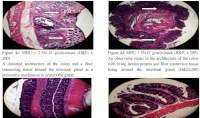
Results: Carcinoembryonic antigen (CEA) levels were significantly higher in the MNU control group than in normal controls (P < 0.05), but decreased progressively with graded dietary O. gratissimum supplementation. Dietary O. gratissimum significantly suppressed the MNU-induced rise in colonic malondialdehyde (P < 0.05) and concomitantly improved the activities of endogenous catalase and superoxide dismutase. Histopathological analysis of MNU-treated rats revealed disrupted colonic architecture characterized by distorted blood vessels, hyperchromasia, cellular pleomorphism, glandular atrophy, and lamina propria necrosis compared with normal and diet controls; these alterations were progressively ameliorated with higher levels of O. gratissimum leaf in the diet. Dietary inclusion of O. gratissimum increased the intake of crude fiber, polyphenols, and flavonoids. Crude fiber levels positively correlated with antioxidant enzyme activities (catalase and superoxide dismutase), while polyphenol and flavonoid contents correlated inversely with CEA.
Conclusion: These findings suggest that O. gratissimum leaf exerts protective effects against MNU-induced colorectal injury, which may be associated with its dietary fiber and antioxidant polyphenolic content.
References
1. Zhang Y, Zhang Y, Yao S, Chen L, Dong Q, Luo R, Zheng K, Liu J, Liu Y, Chen Y and He Y (2025) Inflammatory bowel disease induces colorectal cancer: Risk factors, triggering mechanisms, and treatment with phyto-derivatives. Phytotherapy Research, 39 (8):3386–3418. https://doi.org/10.1002/ptr.70015.
2. Zhou J, Yang Q, Zhao S, Sun L, Li R, Wang J, Wang L and Wang D (2025) Evolving landscape of colorectal cancer: Global and regional burden, risk factor dynamics, and future scenarios (the Global Burden of Disease 1990–2050). Ageing Research Reviews, 104:102666. https://doi.org/10.1016/j.arr.2025.102666.
3. Liu JY, Tsai FL, Chuang YL and Ye JC (2023) Aqueous extracts of Ocimum gratissimum mitigate colitis and protect against AOM/DSS-induced colorectal cancer in mice. Carcinogenesis, 44 (12):837–846. https://doi.org/10.1093/carcin/bgad074.
4. Chang S, Chang Y, Li F, Xu Z, Han X, Liu Y, Li H, Hu S and Tang T (2025) Global, regional, national burden of colorectal cancer from 1990 to 2021, with projections of incidence to 2050: A systematic analysis of the Global Burden of Disease Study 2021. Frontiers in Oncology, 15:1597847. https://doi.org/10.3389/fonc.2025.1597847.
5. Afrin S, Giampieri F, Gasparrini M, Forbes-Hernandez TY, Cianciosi D, Reboredo-Rodriguez P, Zhang J, Manna PP, Daglia M, Atanasov AG and Battino M (2020) Dietary phytochemicals in colorectal cancer prevention and treatment: A focus on the molecular mechanisms involved. Biotechnology Advances, 38:107322. https://doi.org/10.1016/j.biotechadv.2018.11.011
6. Alzate-Yepes T, Pérez-Palacio L, Martínez E and Osorio M (2023) Mechanisms of action of fruit and vegetable phytochemicals in colorectal cancer prevention. Molecules, 28 (11):4322. https://doi.org/10.3390/molecules28114322.
7. Abiodun OO, Nwadike N, Sosanya AS and Ogunleye FN (2020) Ocimum gratissimum Linn (Lamiaceae) protects Wistar rats against inflammation and oxidative stress in trinitrobenzene sulphonic acid-induced colitis. Thai Journal of Pharmaceutical Sciences, 44 (3):136–144. https://doi.org/10.56808/3027-7922.2445.
8. Alabi QK, Akomolafe RO, Omole JG, Adefisayo MA, Ogundipe OL, Aturamu A and Sanya JO (2018) Polyphenol-rich extract of Ocimum gratissimum leaves ameliorates colitis via attenuating colonic mucosa injury and regulating pro-inflammatory cytokines production and oxidative stress. Biomedicine & Pharmacotherapy, 103:812–822. https://doi.org/10.1016/j.biopha.2018.04.071.
9. Tavares ED, Guerra GC, da Costa Melo NM, Dantas-Medeiros R, da Silva EC, Andrade AW, de Souza Araújo DF, da Silva VC, Zanatta AC, de Carvalho TG and de Araújo AA (2023) Toxicity and anti-inflammatory activity of phenolic-rich extract from Nopalea cochenillifera (Cactaceae): A preclinical study on the prevention of inflammatory bowel diseases. Plants, 12 (3):594. https://doi.org/10.3390/plants12030594.
10. Institute of Laboratory Animal Resources (US), Committee on Care and Use of Laboratory Animals (1986) Guide for the care and use of laboratory animals. US Department of Health and Human Services, Public Health Service, National Institutes of Health.
11. Ogungbemi K, Atawodi SE, Taiwo ID, Tomilayo IO, Funmilayo IF and Adebisi AK (2017) Performance characteristics of male Wistar rats fed graded levels of stored powdered Corchorus olitorius. International Journal of Scientific Reports, 3 (2):28.
12. Draper HH and Hadley M (1990) Malondialdehyde determination as index of lipid peroxidation. Methods in Enzymology, 186:421–431. Academic Press. https://doi.org/10.1016/0076-6879(90)86135-I
13. Lowry O, Rosebrough N, Farr AL and Randall RJ (1951) Protein measurement with the Folin phenol reagent. Journal of Biological Chemistry, 193 (1):265–275. https://doi.org/10.1016/0076-6879(90)86135-I
14. Aebi H (1974) Catalase. In: Methods of Enzymatic Analysis, 673–684. Academic Press. https://doi.org/10.1016/B978-0-12-091302-2.50032-3
15. Martin JP Jr, Dailey M and Sugarman E (1987) Negative and positive assays of superoxide dismutase based on hematoxylin autoxidation. Archives of Biochemistry and Biophysics, 255 (2):329–336. https://doi.org/10.1016/0003-9861(87)90400-0
16. Singleton VL (1999) Analysis of total phenols and other oxidation substrates and antioxidants by means of Folin-Ciocalteu reagent. Methods in Enzymology, 299:152–178.
17. Chang CC, Yang MH, Wen HM and Chern JC (2002) Estimation of total flavonoid content in propolis by two complementary colorimetric methods. Journal of Food and Drug Analysis, 10 (3):178–182. https://doi.org/10.38212/2224-6614.2748
18. Pearson D (1976) The chemical analysis of foods. 7th ed. Churchill Livingstone, London. https://doi.org/10.5555/19791492291
19. Kiernan J (2015) Histological and histochemical methods. Scion Publishing Ltd.
20. Alatise OI, Olasehinde O, Olokoba AB, Duduyemi BM, Famurewa OC, Adeyemi OF, Agbakwuru EA and Asombang AW (2019) Colorectal cancer screening guidelines for Nigeria in 2019. Nigerian Journal of Gastroenterology and Hepatology, 11 (2):42–55. https://doi.org/10.4103/NJGH.NJGH_15_20
21. Khan SZ and Lengyel CG (2023) Challenges in the management of colorectal cancer in low- and middle-income countries. Cancer Treatment and Research Communications, 35:100705. https://doi.org/10.1016/j.ctarc.2023.100705
22. Nwozo OS, Effiong EM, Aja PM and Awuchi CG (2023) Antioxidant, phytochemical, and therapeutic properties of medicinal plants: A review. International Journal of Food Properties, 26 (1):359–388. https://doi.org/10.1080/10942912.2022.2157425
23. Olamilosoye KP, Akomolafe RO, Akinsomisoye OS, Adefisayo MA and Alabi QK (2018) The aqueous extract of Ocimum gratissimum leaves ameliorates acetic acid-induced colitis via improving antioxidant status and hematological parameters in male Wistar rats. Egyptian Journal of Basic and Applied Sciences, 5 (3):220–227. https://doi.org/10.1016/j.ejbas.2018.05.006
24. Jeon HJ, Seo JH, Jeong E, Son CY, Rawding PA, Hwang Y, Bang S, Jang TM, Kubiatowicz LJ, Hyun SH and Hong S (2024) Carcinoembryonic antigen-positive circulating epithelial cells as a biomarker for the diagnosis and prognosis of colorectal cancer. Biotechnology and Bioprocess Engineering, 29 (5):877–889. https://doi.org/10.1007/s12257-024-00115-4
25. Wu K, El Zowalaty AE, Sayin VI and Papagiannakopoulos T (2024) The pleiotropic functions of reactive oxygen species in cancer. Nature Cancer, 5 (3):384–399. https://doi.org/10.1038/s43018-024-00738-9
26. Rahman MA, Khatun MT, Mim AK, Khandocar MP, Rahman A, Hasan MH, Shimki AI, Hossain MS, Shoily MS, Faraque A and Amin MF (2025) Oxidative stress in DNA damage and neurodegenerative diseases: Unveiling the mechanisms and therapeutic opportunities. Cell Biochemistry and Biophysics, 83 (4):4233–4252. https://doi.org/10.1007/s12013-025-01845-9
27. Anwar S, Sarwar T, Khan AA and Rahmani AH (2025) Therapeutic applications and mechanisms of superoxide dismutase (SOD) in different pathogenesis. Biomolecules, 15 (8):1130. https://doi.org/10.3390/biom15081130
28. Akinmoladun AC, Ibukun EO, Afor E, Obuotor EM and Farombi EO (2007) Phytochemical constituent and antioxidant activity of extract from the leaves of Ocimum gratissimum. Scientific Research Essay, 2 (5):163–166.
29. Gal AF, Rugină D, Dumitraș DA, Tabaran AF, Matei-Lațiu MC and Andrei SM (2025) Limited chemopreventive effects of oral administration of Polyphenol-60 from green tea in the MNU-induced rat mammary tumor model. Antioxidants, 14 (8):1009. https://doi.org/10.3390/antiox14081009
30. Mileo AM and Miccadei S (2016) Polyphenols as modulator of oxidative stress in cancer disease: New therapeutic strategies. Oxidative Medicine and Cellular Longevity, 2016 (1):6475624. https://doi.org/10.1155/2016/6475624
31. Wright TC, Kurman RJ and Ferenczy A (1994) Precancerous lesions of the cervix. In: Blaustein's Pathology of the Female Genital Tract, 229–277. Springer, New York. https://doi.org/10.1007/978-1-4757-3889-6_7
32. Watanabe N, Shimizu M, Kochi T, Shirakami Y and Tanaka T (2014) Esophageal carcinogenesis. Open Journal of Pathology, 4 (4):151–170. https://doi.org/10.4236/ojpathology.2014.44021
33. Lauwers GY and Srivastava A (2007) Gastric preneoplastic lesions and epithelial dysplasia. Gastroenterology Clinics of North America, 36 (4):813–829. https://doi.org/10.1016/j.gtc.2007.08.008
34. Ugbogu OC, Emmanuel O, Agi GO, Ibe C, Ekweogu CN, Ude VC, Uche ME, Nnanna RO and Ugbogu EA (2021) A review on the traditional uses, phytochemistry, and pharmacological activities of clove basil (Ocimum gratissimum L.). Heliyon, 7 (11):e08404. https://doi.org/10.1016/j.heliyon.2021.e08404
35. Ikokide JE, Jaja FI, Ajibade TO, Oyagbemi AA and Oyeyemi MO (2025) Phytochemical analysis of polyphenol-rich extract of Ocimum gratissimum leaves by GC–MS, TFC, TPC, TTC, and in vitro antioxidant properties. Discover Molecules, 2 (1):24. https://doi.org/10.1007/s44345-025-00030-y
36. Narisawa T, Fukaura Y, Hasebe M, Nomura S, Oshima S and Inakuma T (2000) Prevention of N-methylnitrosourea-induced colon carcinogenesis in rats by oxygenated carotenoid capsanthin and capsanthin-rich paprika juice (44523). Proceedings of the Society for Experimental Biology and Medicine, 224 (2):116–122. https://doi.org/10.1177/153537020022400209
37. Zinov'Eva VN and Spasov AA (2011) Mechanisms of the anticancer effects of plant polyphenols. I. Blockade of initiation of carcinogenesis. Biochemistry (Moscow) Supplement Series B: Biomedical Chemistry, 5 (2):113–123. https://doi.org/10.1134/S1990750811020181
38. Biswas V, Praveen A, Marisetti AL, Sharma A, Kumar V, Sahu SK and Tewari D (2022) A mechanistic overview on impact of dietary fibres on gut microbiota and its association with colon cancer. Dietetics, 1 (3):182–202. https://doi.org/10.3390/dietetics1030017
39. Fang Y, Yan C, Zhao Q, Xu J, Liu Z, Gao J, Zhu H, Dai Z, Wang D and Tang D (2021) The roles of microbial products in the development of colorectal cancer: A review. Bioengineered, 12 (1):720–735. https://doi.org/10.1080/21655979.2021.1889109
40. Macfarlane GT and Macfarlane S (2012) Bacteria, colonic fermentation, and gastrointestinal health. Journal of AOAC International, 95 (1):50–60. https://doi.org/10.5740/jaoacint.SGE_Macfarlane
41. Oyegoke RA, Oladele JO, Oladele OT and Oladiji AT (2024) Role of dietary fibre and phytonutrients in human health and nutrition. In: Nutrition and Diet in Health, 121–147. CRC Press. https://doi.org/10.1201/9781003361497-12
42. Lattimer JM and Haub MD (2010) Effects of dietary fiber and its components on metabolic health. Nutrients, 2 (12):1266–1289. https://doi.org/10.3390/nu2121266
Downloads
Published
How to Cite
Issue
Section
License

This work is licensed under a Creative Commons Attribution-NonCommercial 4.0 International License.